.webp)


.webp)
In over a decade of tasting thousands of teas professionally, nothing generates more questions, or more genuine delight, than sparkling tea. Let me answer every single one of them."
Eid Al Adha is a time of gathering, of generosity, of tables laden with food and drinks that feel worthy of the occasion.
More and more, our customers at AETEA are turning to sparkling tea as their centrepiece celebration drink, something refined, naturally beautiful, and alcohol-free.
But questions come with it. What exactly is it? Does it taste like tea or fizzy water? Will my guests actually enjoy it? Can children drink it?
Below, I answer every query I've received, drawing on years of professional tasting experience, so that you can serve sparkling tea with complete confidence at Eid.
Sparkling tea is brewed tea (real tea, from real leaves) that has been naturally carbonated and, in most premium versions, undergone a controlled fermentation process not unlike wine or kombucha.
The result is a drink with genuine depth: complex aroma, nuanced flavour, and a beautiful effervescence that dances in the glass.
At AETEA, our sparkling teas begin with single-origin leaves: white teas, green teas, oolongs, sourced from high-elevation gardens.
These are not flavoured syrups or tea-flavoured sodas. They are crafted beverages that reward slow sipping and good company.
Taster's note: When I open a bottle of premium sparkling tea, the first thing I do is smell the neck of the bottle before pouring. The aromatics that rise in those first seconds tell me everything about quality. Cheap versions smell flat; great sparkling teas smell alive.
Here is my honest professional assessment: sparkling tea tastes like tea, not like sparkling water.
The carbonation carries the tea's natural aromatics upward, which actually intensifies the flavour rather than diluting it. You get the tea's character, its floral notes, its vegetal undertones, its finish, but with a lifted, celebratory quality that still water cannot achieve.
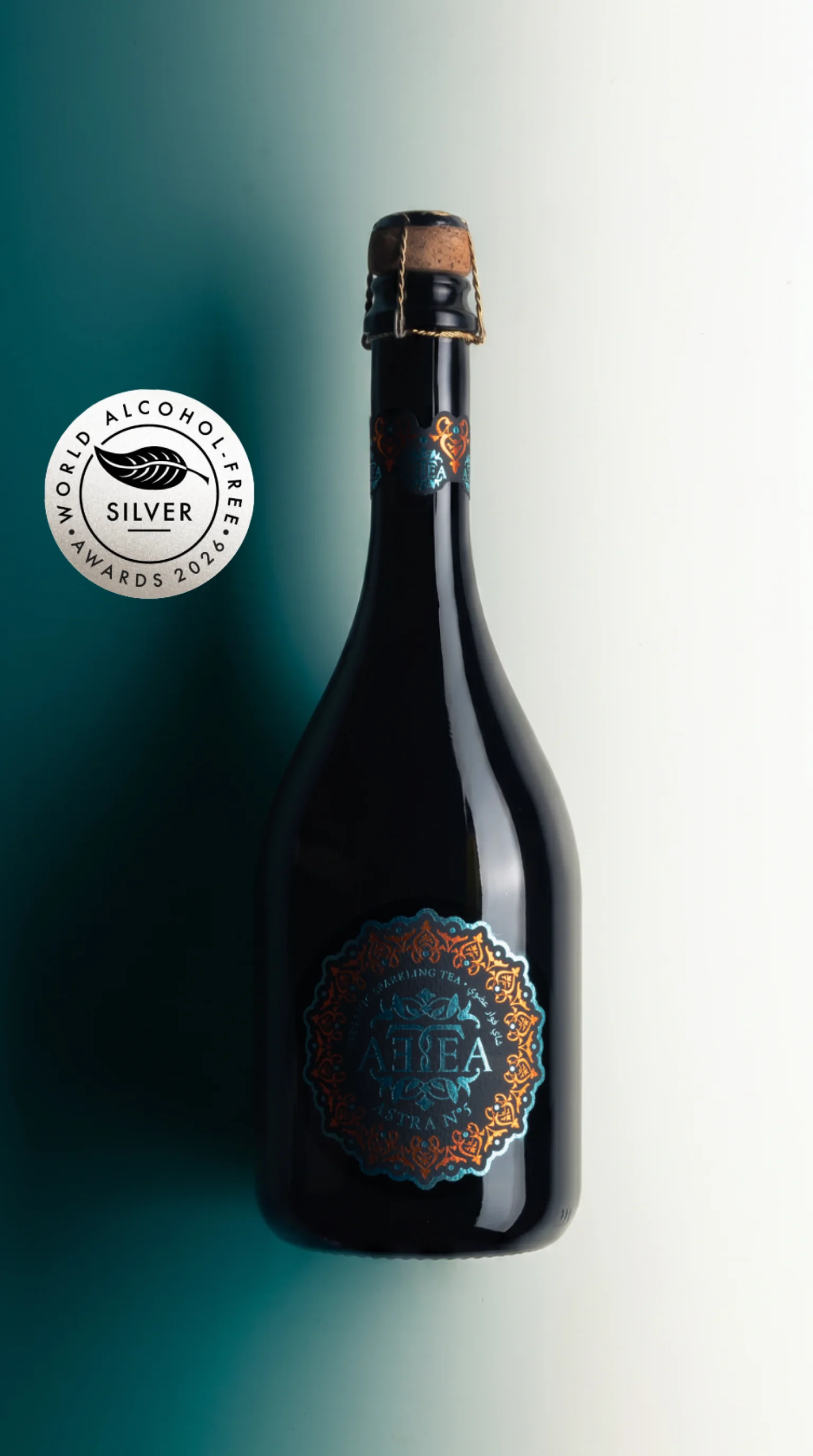
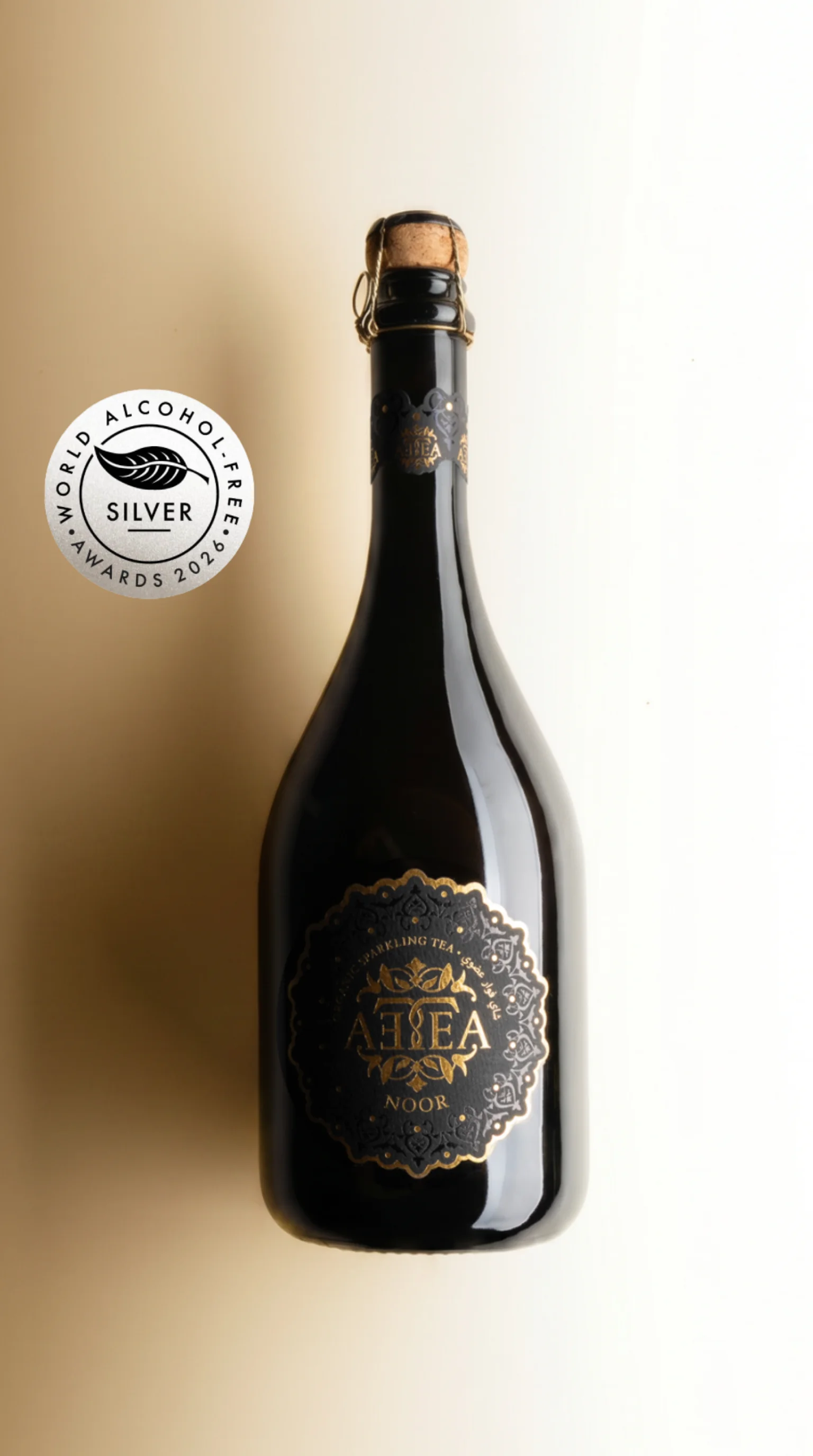
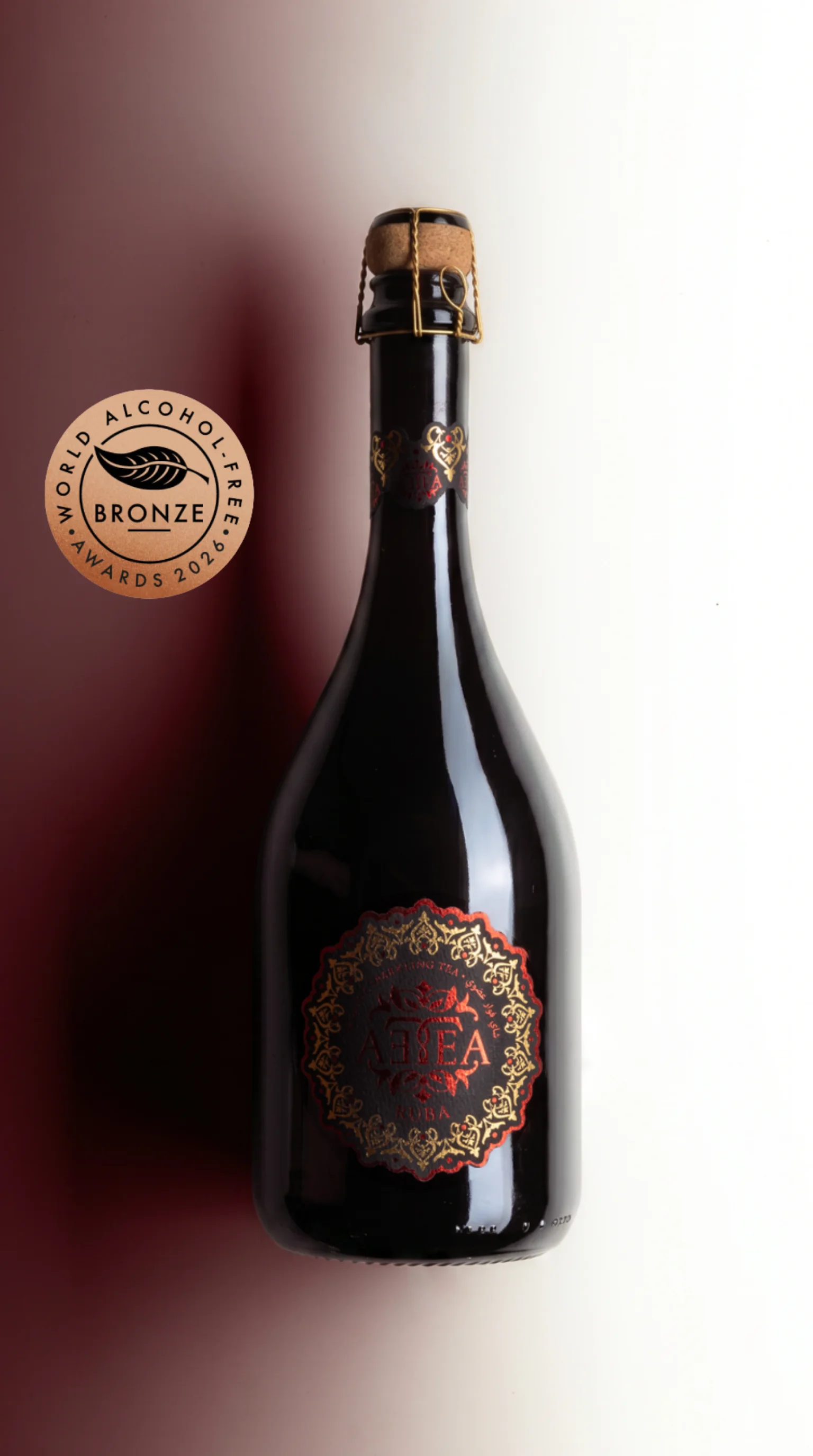
At AETEA, each sparkling tea has its own distinct personality. Here is my honest taster's read on all three:
Chamomile · Green Tea · Citrus
The most serene of the three. Chamomile's calming floral warmth meets clean green tea and a lift of citrus. Golden in the glass, soft on the palate; my recommendation for guests who prefer lighter, more delicate drinks. Pairs beautifully with fresh salads, light mezze, and sweet pastries.
Hibiscus · Oolong · Red Fruits
The showstopper. Ruby-red in the glass, vibrant with hibiscus tartness, layered oolong depth, and a red-fruit finish that lingers. This is the one guests remember and ask about. Bold, radiant, and exactly right for an Eid table where you want the drinks to make an impression.
Rooibos · Dates · Lemon
The most culturally resonant. Earthy rooibos anchors a blend sweetened naturally with dates and brightened with lemon, a profile that feels at home on any Gulf table.
Deep amber with golden undertones. My pairing pick for lamb, spiced dishes, and Eid sweets alike.
This is one of the most common questions I receive, and the answer is: related, but not the same.
Both involve brewed tea and some form of fermentation. But kombucha undergoes a full SCOBY-driven fermentation, producing a distinctly sour, vinegary profile with probiotic cultures.
Premium sparkling tea typically uses a lighter, more controlled fermentation (or no fermentation at all, relying on natural CO₂ injection), resulting in something far closer to the clean taste of wine or sparkling water without kombucha's sharpness.
If you've tried kombucha and found it too acidic, sparkling tea will almost certainly suit you far better.
Most sparkling teas are suitable for children and are naturally alcohol-free. However, since some premium sparkling teas undergo fermentation, trace levels of alcohol (typically well below 0.5% ABV, the international non-alcoholic threshold) may be present. Always check the label.
AETEA's sparkling teas clearly indicate alcohol content, and our collections are fully non-fermented and appropriate for all ages.
In practical terms: sparkling tea is one of the most family-inclusive Eid table drinks you can choose. Children love the fizz; adults appreciate the complexity.
Yes, since it is brewed from real tea leaves, caffeine is naturally present. The level varies by tea type. White tea sparkling tends to have the least caffeine; green tea is moderate; black tea-based variants are higher.
For guests who are caffeine-sensitive, serve sparkling white tea, or look for specific decaffeinated options. A general rule from my tasting practice: the paler the tea, the lower the caffeine.
Serving matters enormously. Here is exactly what I recommend from years of pairing and hospitality experience:
Professional tip: For an Eid table centrepiece, arrange your sparkling tea bottles in a bucket of ice surrounded by fresh mint and rose petals. The visual impact alone signals to guests that this is a considered, special drink, not an afterthought.